Hair loss: how to tell what is normal, and what to do
How many strands a day is expected, when shedding becomes a warning sign, and the most common causes in adult women.
Reviewed August 2026 · Nelma Faleiro
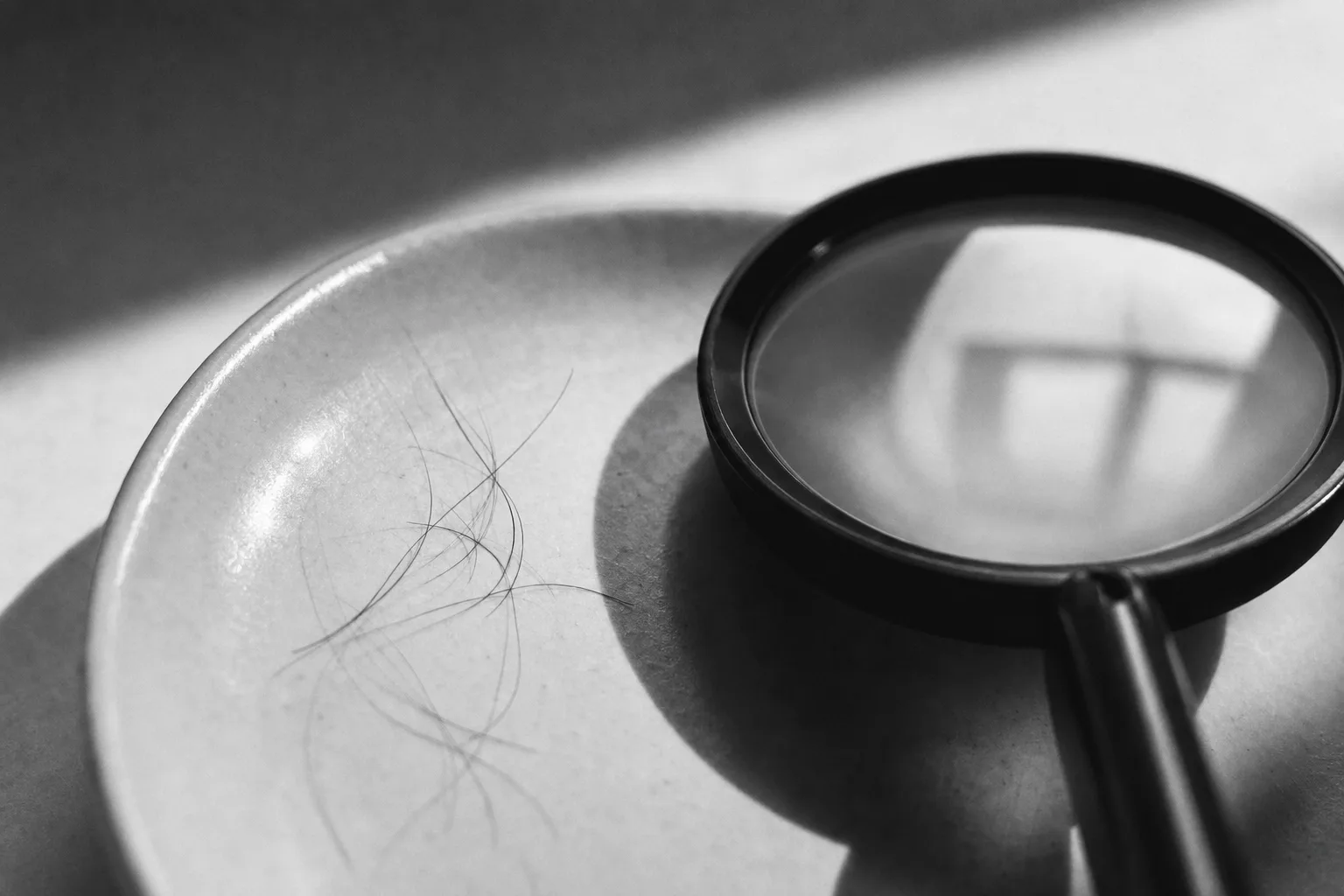
Losing hair every day is normal. Each strand has a cycle: it grows for years, rests for months and falls to make room for another. The average is between 50 and 100 strands a day, more on wash days, fewer on others. The problem is not shedding: it is shedding that is not replaced.
Three signs that matter more than counting strands
Your ponytail changed thickness. It is the most reliable home measure there is, far better than counting strands in the drain. Your parting widened. If the centre line has become more visible over recent months, density has been lost. New hair grows in finer. That is miniaturisation, and it is the most important of the three, because it means the follicle is weakening rather than simply resting.
The most common causes in adult women
Telogen effluvium: diffuse shedding that appears two to four months after a trigger: childbirth, surgery, restrictive dieting, illness, bereavement, intense stress. Hormonal change, especially thyroid, perimenopause and menopause. Nutritional deficiency, particularly iron and vitamin D. Genetic predisposition, showing as progressive thinning at the crown. And scalp causes in themselves: seborrhoeic dermatitis, folliculitis, product build-up, and traction from tight braids and ponytails.
The right home-care product comes after the assessment
Home care is part of the treatment. Shedding begins in the follicle, below the skin, and the cause may be hormonal, nutritional, inflammatory or in the scalp itself, which is why the product is chosen after the consultation and the examination, not before. With the diagnosis in hand, the hair-therapy shampoo and actives recommended for your case carry the effect of the sessions home and help the scalp respond better to the protocol.
When to see a hair therapist
See a hair therapist if there is shedding, itching, patches, a lesion, a wound, persistent scalp pain, sudden heavy shedding, or shedding alongside other symptoms. Hair therapy is an aesthetic service that acts on the scalp and supports the treatment as a whole.