
Curly and coily hair is what this house specialises in.
It is a subject of research: Nelma’s specialisation is on afro-textured hair processed with sodium hydroxide. Few salons in São Paulo can say that.
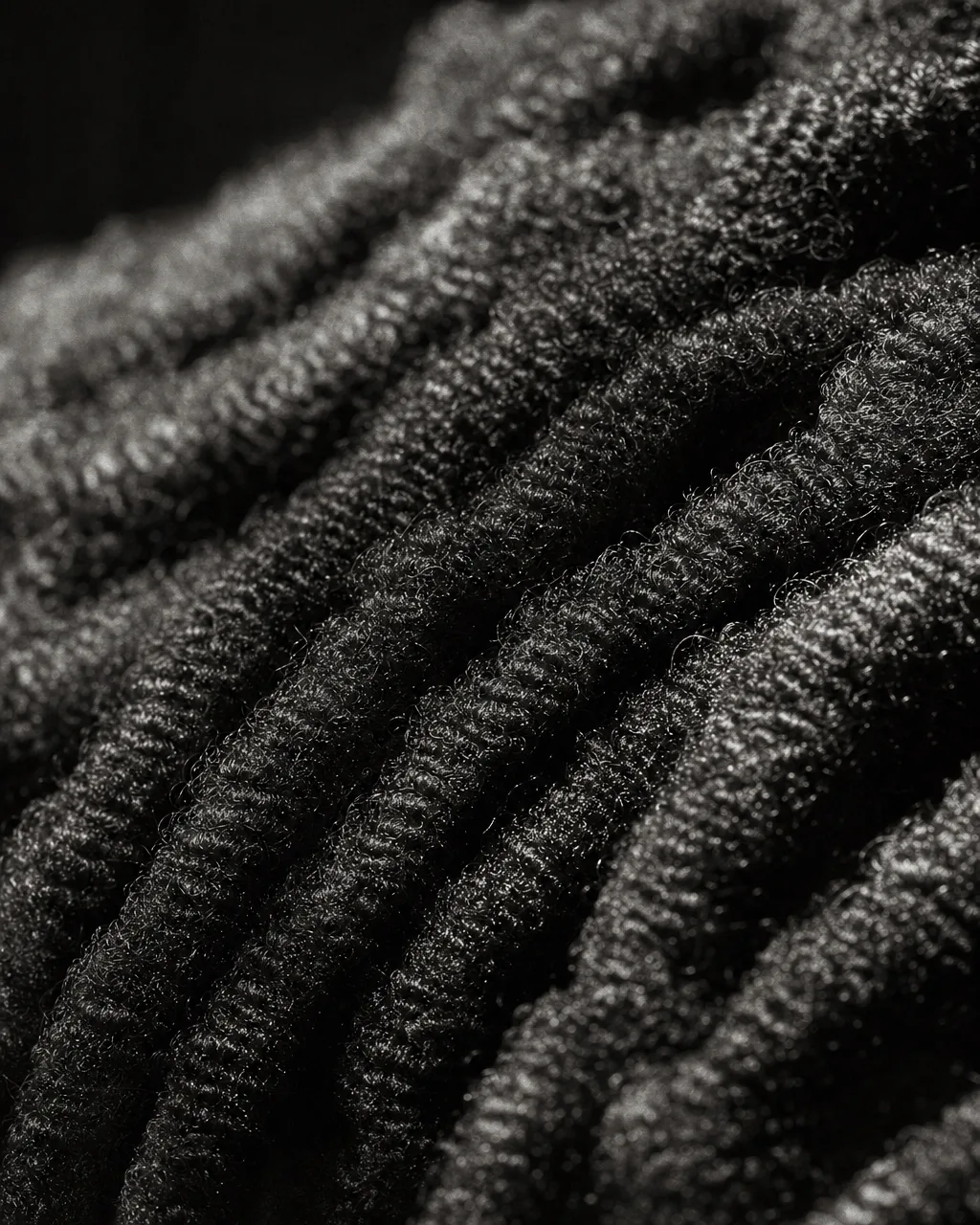
Most hairdressing training in Brazil still treats straight hair as the standard and coily hair as a variation. The result is familiar: cutting wet hair that shrinks by 40%, chemistry applied without testing, and the client leaving with broken hair and dented confidence.
What changes here
Dry or strand-by-strand cutting when the shape demands it. Genuine lipid replacement rather than generic conditioning. Assessment of the scalp beneath the roots, the area most affected by braid tension and product build-up. And a mandatory test strand before any relaxer or straightening service.
Going natural
If you are transitioning, your hair has two textures and two behaviours at once. No single haircut solves that: it takes a plan across months, in stages. We build that plan with you, including when to cut off the processed length.
Why here
01
Specialisation backed by research
Water and lipid retention in chemically processed afro-textured hair: the subject of Nelma’s research.
02
Always a test strand
No chemical service on hair with an unknown history. None.
Our work
Frequently asked
Trichoscope scalp assessment
Twenty minutes: a guided consultation and a trichoscope examination of your scalp, with the screen turned towards you.
US$ 95 · Fully credited if you decide to treat. See the full price list.